Key Takeaways:
- Lighting is crucial, so plan your lighting early. Think beyond aesthetics and consider colour temperature, brightness, placement and the types of lights that suit each room.
- Spend more carefully on high-use fittings such as toilets, faucets and bathroom ware because durability and ease of maintenance matter.
- Measure before you buy. Check dimensions before purchasing your furniture. Always check with your ID or renovation contractor before buying.
- It’s also good to compare prices before purchasing. Once you’ve shortlisted what you want, track major sales and compare to get the most bang for your buck!
- Plan your HDB renovation spending strategically. Credit cards, BNPL, and payment services like CardUp can help you earn rewards on eligible spending while managing your cash flow. As always, use them responsibly.
Home renovation is a stress-free experience, said no one ever.
We’ve all heard our fair share of home renovation horror stories, whether it’s a budget spiralling because of unexpected costs, poor workmanship, lengthy delays or communication breakdowns.
I recently went through the process myself after purchasing a resale HDB flat with my wife. While our HDB home renovation journey was nowhere near as bad as some of the stories you hear, we still hit plenty of road bumps along the way.
As first-time homeowners, we went into the renovation with very little experience. Looking back, we wish we’d understood a few things earlier.
If you’re renovating your first home, here are some home renovation tips we picked up along the way that may help make your journey less of a headache!
But before that, a few caveats:
- We purchased a resale HDB flat, so your experience may be different if you are renovating a new BTO or private property such as a condominium or landed home.
- We had a tight renovation budget, so we wanted to keep our HDB renovation costs minimal and practical, rather than going overboard.
- The flat we purchased also came with plenty of kitchen cabinets, which helped with storage space. Plus, we also minimised customised built-ins to slash our HDB renovation costs.
Best 8 HDB Home Renovation Tips for a Smoother, Less Stressful Journey
#1 Lighting Matters Far More Than You Think
I’ll be honest: my wife and I overlooked lighting during our home renovation because we thought it would be as simple as choosing a light that matched our home’s look and calling it a day.
It turned out to be much more complicated.
We found out that there’s a lot of science behind it, from electrical points and placement to brightness, colour temperature and the type of fixture you use. Needless to say, the number of decisions became too overwhelming for us.
That said, we knew we wanted a few things:
- Downlights (or recessed lighting). We wanted something straightforward and easy to maintain, especially lights where replacing the bulb wouldn’t involve removing bulky covers or shades.
- Track lights. We liked the clean appearance and the flexibility to reposition or add lights later.
- LED cove lighting in the living room. Because we had a false ceiling, the cove lights’ ambient light helped illuminate the room and complemented our downlights beautifully.
Ultimately, the right combination depends on both the look and functionality you want.
For us, practicality came first. We settled on a mix of track lights and downlights so that each room had sufficient lighting while still giving us some flexibility over the overall look.
We also chose LED lighting instead of traditional incandescent bulbs because LEDs last longer, produce less heat, and consume less energy.
If you are considering downlights or track lights, here are a few details worth thinking about.
Trim Colour
Trim colour can affect how the light looks in the room.
Darker trims absorb more light, while lighter finishes such as silver or white reflect more light and can make the space appear brighter.
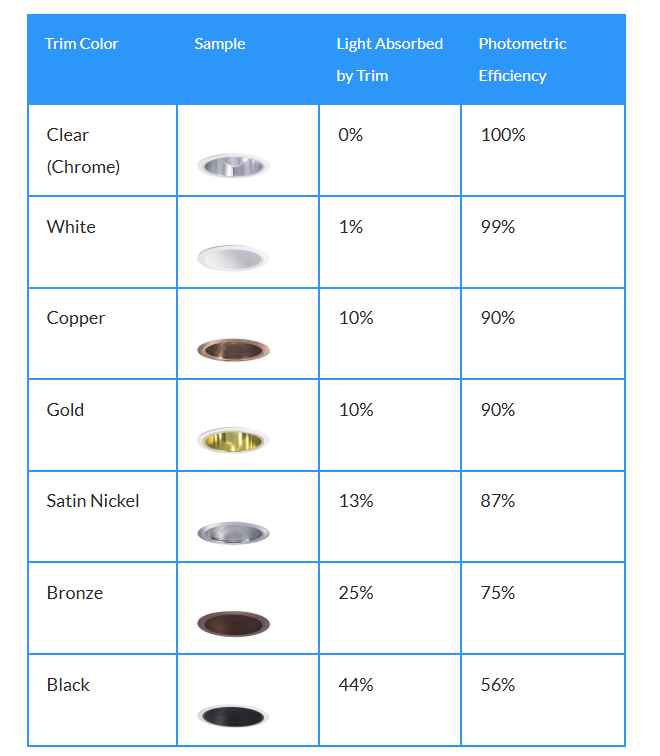
Another important factor to consider during your HDB renovation is how the trim looks against your ceiling. For example, a white trim will blend in more seamlessly with a white ceiling.
Beam Angle
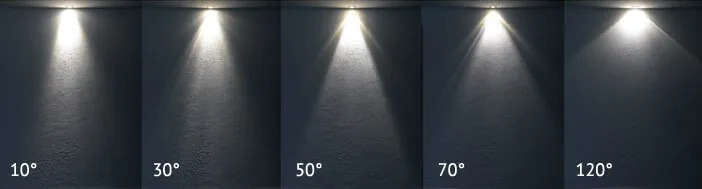
The beam angle is another consideration when choosing your downlights. It determines how light is spread within a space.
If your beam angle is too narrow, then a room may be too dim. Conversely, if it’s too wide, the lighting can feel too harsh.
- Narrow (less than 25°): sharp and focused beam. Best for targeted lighting, such as highlighting artwork or specific parts of a room.
- Medium (25° to 45°): provides a more balanced spread and suits general room lighting, bathrooms, or kitchens.
- Wide (more than 45° to 120°+): creates a broader, softer spread of light. Useful for larger spaces where you want more overall illumination.
As a rule of thumb, choose a larger beam angle for broader illumination, while smaller fixtures work better when you want more targeted lighting.
Colour Temperature
Measured in Kelvin (K), colour temperature affects a room’s overall mood and ambience.
- Warm (2,000K to 3,000K): creates a cosier, more relaxing atmosphere.
- Neutral (3,100K to 4,500K): gives you a brighter and more neutral-looking light without a strong yellow or blue tint.
- Cool (4,600K to 6,500K): produces a cool and bright appearance, similar to daylight.
You can also opt for tri-colour downlights, which let you switch between three colour temperatures (warm white, neutral white, and cool white), either with a standard wall switch or a remote control.
Also, keep the fixed lighting in each room at a consistent colour temperature. Mixing cool and warm lights in the same space can make the overall lighting look disjointed.
Wattage and Lumens
The lumens (lm) and wattage (W) measure the brightness of your lights. Typically, larger or task-heavy spaces such as the kitchen require more powerful lighting to illuminate the space. In our kitchen, for instance, we installed two downlights with 12W and 1,680 lumens each. These have a wide 120° beam angle, which gives us plenty of light for meal prepping, chopping vegetables, or cleaning up. We also installed undercabinet LED strip lighting to better illuminate the space.
#2 Don’t Skimp on Your Bathroom Fittings
Yes, we all know Taobao is a great place to find home renovation bargains, including bathroom fittings.
However, the quality can be hit or miss.
There are plenty of homeowner discussions about cheaper sanitary fittings from Taobao peeling, leaking, or wearing out sooner than expected.
We have also experienced something similar ourselves while living in rental homes.
Most installed sanitary fittings are low quality, so they leak, rust, or deteriorate within a few months. As a matter of fact, it’s quite common for us to replace them (often at our own expense).
Now that we finally have our own home, we decided to spend more on durable, long-lasting fittings so we won’t have to worry about replacing them for years.
Reputable household brands like Hansgrohe, Grohe, Duravit, Kohler, and American Standard are known for their solid construction, anti-corrosive materials like solid brass or stainless steel, and ceramic disc cartridges that prevent drips and leaks for hundreds of thousands of cycles.
Depending on the product and brand, you may also get longer warranty coverage, which can provide some additional peace of mind.
That said, you don’t necessarily need the most expensive bathroom fittings; lesser-known brands may also offer solid construction and durability but at a more budget-friendly price.
What matters more is researching and comparing the specifications, materials, and warranty before you buy!
#3 Choose the Right Toilet
You may think toilets are all alike, but they vary in design, installation requirements, dimensions, and features. Buying the wrong one can create unnecessary headaches later.
If you’re replacing your toilet, consider these few things.
Check the Toilet Drainage System
Before shopping for a toilet, find out which trap system your bathroom uses.
The two common configurations are S-trap and P-trap. This will essentially determine the type of toilet you can buy.
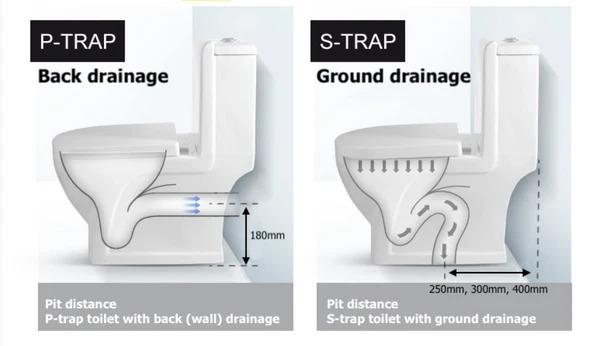
Basically, an S-trap toilet is connected to the floor outlet, while a P-trap toilet connects horizontally to an outlet through the wall.
Check with your interior designer or renovation contractor before purchasing your toilet so you know what your bathroom requires.
You may also want to confirm the toilet dimensions and pit distance before buying, especially if you’re ordering online.
Decide Which Toilet Type Suits You
There are four types of toilets to choose from: two-piece, one-piece, wall-hung, and smart toilet.
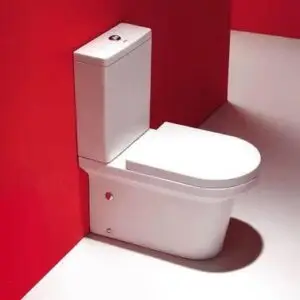
Two-piece toilets, otherwise known as close-coupled toilets, are the most common type. The tank is separated from the toilet seat.
They’re usually the most budget-friendly. So if you want something functional without all the bells and whistles, this is probably the most suitable option for you!
However, the gap between the tank and bowl can collect dirt and may require more effort to clean.
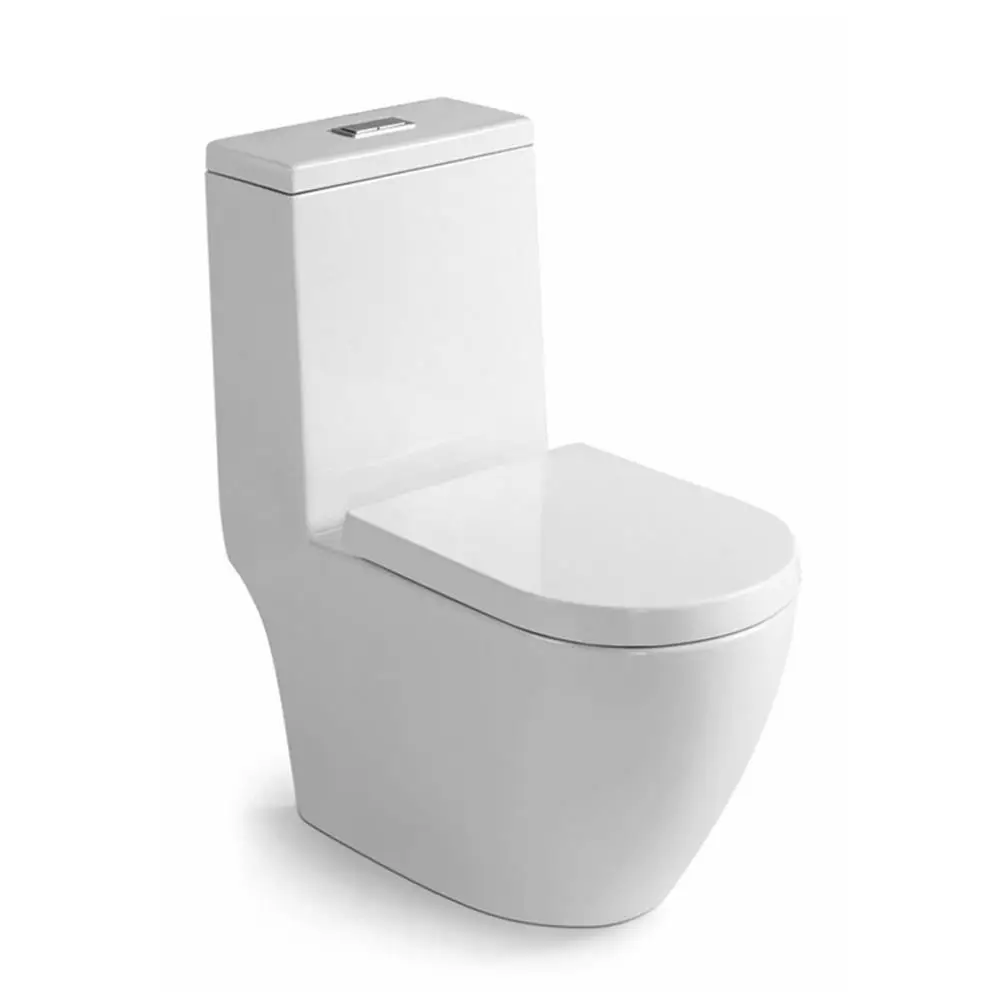
One-piece toilets, on the other hand, integrate the tank and bowl into a single unit.
The more seamless design makes them easier to wipe down because fewer gaps and joints allow grime to collect.
Additionally, because the tank and bowl are connected, this reduces the risk of leaks at the tank gasket, which is common with two-piece toilets.
That being said, one-piece toilets generally cost more. If the ceramic cracks or leaks, you’ll need to replace the entire toilet, which can also be more costly.
Wall-hung toilets can give your bathroom a cleaner, more minimalist look, but installation and repairs can be far more complicated and expensive.
Then there are smart toilets, which may include features such as built-in bidets, sensors, automatic cleaning and heated seats. Unsurprisingly, these typically sit at the pricier end of the market.
Go With a Rimless Toilet
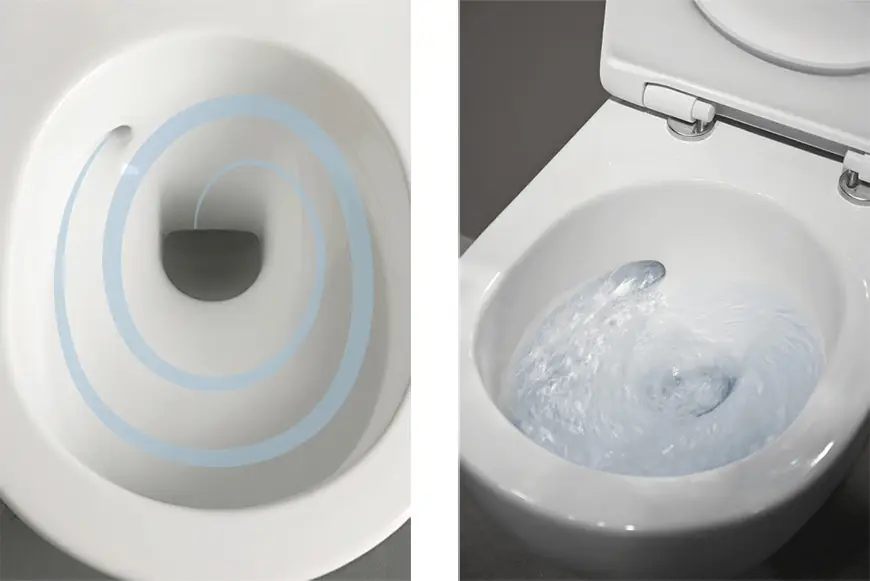
If you’ve used a traditional toilet with an inner rim, then you’ll know how easily grime, mould, and limescale can accumulate underneath it. This often leads to tougher scrubbing and cleaning.
A rimless toilet removes this hidden edge, giving you fewer hard-to-reach areas to clean.
Many rimless designs also direct water around the bowl during flushing, helping to rinse the internal surface more evenly. Some toilet designs also include a special glaze that makes cleaning easier.
For us, the easier maintenance alone made a rimless design worth considering.
Consider a Soft-Close Lid
This is more of a quality-of-life improvement.
A soft-close toilet seat prevents the lid from slamming shut, reducing noise and impact on the seat, hinges, and ceramic. You only need to give the lid a gentle push and let the mechanism do the rest.
#4 Invest in a Good-Quality Kitchen Faucet
Like sanitary wares, we’ve experienced our fair share of kitchen faucets that break down every so often. So, our kitchen faucet was another item we were willing to spend a little more on for our HDB home renovation.
Since we cook regularly, the kitchen faucet is one of the most-used fittings in our home. My advice is to invest in a quality kitchen tap that offers long-term reliability so you don’t have to worry about leaks or inconsistent water pressure.
These days, kitchen faucets come with additional features such as touchless sensors. My wife and I initially leaned towards getting one with a touchless function, but realised that it’s more of a “nice-to-have feature” rather than a “must-have”. So don’t pay unnecessarily for features you don’t need.
We eventually opted for a magnetic pull-out kitchen faucet over a conventional spring-style design. The pull-out head snaps back into position magnetically (and more securely), reducing the chances of the hose drooping over time. It also came with a flexible spray head that makes it easier to clean every corner of the sink.
#5 Compare, Compare, Compare
This seems obvious, but one of the easiest ways to control your renovation cost in Singapore is simply to avoid rushing into purchases.
Shortlist the products you want early, then compare prices and wait for sales when your renovation timeline allows.
Whether it was furniture, electronics, or even our toilet, my wife and I spent a fair amount of time visiting showrooms, trying things out and narrowing down what we liked.
Once we had a shortlist, we monitored prices and waited for major promotions before buying! From our experience, shopping online during double-digit sales is the best time to shop, especially when you stack vouchers, store discounts, and bank rebates.
Another useful tip is to use Taobao’s image search feature.
Upload a photo of the product you are looking at, and you may find the same or a very similar item sold by other merchants.
We tried this ourselves in a couple of instances. For example, a shoe cabinet that was going for S$799 at a local store was on Taobao for one-third the price.
#6 Plan Enough Power Sockets
This is often overlooked during home renovations, but it’s extremely crucial to have enough power sockets because they’re harder to add once all your carpentry, furniture, and appliances are in place.
When going through your electrical plan with your electrician, map out where your appliances and furniture will actually sit. This includes air conditioners, desktop computers, Wi-Fi router, phone chargers, kitchen appliances, washer and dryer, TV, robot cleaner, etc.
A general rule of thumb for HDB dwellers is to plan for at least six sockets in your living room, eight in the kitchen, and four in each bedroom. It’s also worth adding a few more sockets where practical to future-proof your home.
#7 Make the Most of Your Renovation Spending
Using a cashback or miles credit card for your renovation is a great way to stretch your dollar.
Since you’re going to be spending anyway, why not use your expenses to get something back in return?
Here are some of the ways we maximised our credit card spending:
- We used CardUp and Citi PayAll with our renovation contractor and electrician.
- Signed up for a new credit card for the welcome offer. If you’re doing this, ensure you meet the minimum spending requirement and that your purchases qualify.
- Tracked our credit card limits and bonus caps.
- Double and triple-checked the merchant category code (MCC) to determine whether or not a transaction is eligible for bonus points. If unsure, use tools like HeyMax to identify the MCC.
- Split our payments where possible, but pay off our credit bills punctually—no exception. Buy now, pay later (BNPL) services such as Grab PayLater and Atome let us split purchases into eligible, interest-free monthly instalments. This helped us manage cash flow better while still optimising our credit card bonus caps.
#8 Measure, Measure, Measure
We all want our homes to look nice, but we learned that not every piece of furniture we like will fit comfortably in our space—real estate is precious. This is especially true for bulky items such as sofas, dining tables, and mattresses.
Before buying anything, take measurements of both the item and the space where you intend to place it. Then, run the dimensions past your ID or contractor to make sure there is enough room not just to fit the item, but also to move around it comfortably.
Conclusion: Nailed It — HDB Home Renovation Edition
Renovating our first home taught us that the small decisions often matter just as much as the big ones. Things like lighting placement, power sockets, bathroom fittings and even the type of kitchen faucet you choose can make a noticeable difference once you actually start living in the space.
If there’s one thing we learned, it’s to plan carefully, compare your options and decide where it makes sense to spend more. Not everything needs to be premium, but cutting costs on something you use every day may cost you more in the long run. Budget and track your renovation costs sensibly!
Your home renovation probably won’t go perfectly according to plan. But doing your homework beforehand can save you plenty of money, frustration and second-guessing along the way.
If you’d rather keep some of your savings aside than spend a large portion on your renovation, a personal loan could give you extra financial flexibility. Compare personal loan interest rates, tenures and monthly instalments on CompareSing.
Still deciding between a personal loan and a renovation loan? This guide breaks down the key differences to help you make a more informed decision.